In today’s competitive digital landscape, businesses invest heavily in advertising, social media campaigns, and promotional strategies to attract customers. While these efforts can bring traffic to your business, many companies overlook one crucial factor that determines whether that traffic turns into revenue: their website’s ability to convert visitors into customers.
A high-converting website is designed not just to look attractive but to guide visitors toward taking action—whether that action is making a purchase, booking a service, requesting a quote, or contacting your team. When a website is optimized for conversions, it can significantly increase sales without requiring additional marketing investment.
Instead of spending more money to attract new visitors, businesses can generate higher revenue simply by improving how their website performs.
This article explains how a high-converting website works, why it matters for business growth, and the strategies that can help transform an ordinary website into a powerful sales engine.
A conversion occurs when a website visitor completes a desired action. Depending on the business model, conversions can include:
purchasing a product
booking an appointment
filling out a contact form
signing up for a newsletter
requesting a quote
starting a free trial
For example, if 1,000 people visit a website in a month and 20 of them become customers, the website’s conversion rate is 2%.
Now imagine increasing that conversion rate to 4%. Without increasing traffic, the number of customers doubles from 20 to 40.
This is the power of conversion optimization. Instead of investing more in advertising or marketing campaigns, businesses improve the performance of their existing website traffic.
Many business websites focus primarily on design aesthetics rather than conversion performance. While visual appeal is important, it does not guarantee results.
Common issues that reduce website conversions include:
confusing navigation
unclear messaging
slow loading speed
lack of clear call-to-action buttons
complicated contact forms
poor mobile experience
absence of trust signals such as reviews
When visitors encounter these obstacles, they often leave the website without taking any action.
This results in lost opportunities and wasted marketing efforts.
A high-converting website is strategically designed to guide visitors through a structured journey from awareness to action.
Such websites focus on:
clear communication
intuitive user experience
strong credibility
persuasive messaging
easy contact or purchase processes
By eliminating friction and building trust, high-converting websites help visitors make decisions quickly and confidently.
This process significantly improves sales outcomes without requiring additional marketing expenses.
Visitors typically form an opinion about a website within a few seconds. If the design appears outdated, cluttered, or difficult to navigate, users may leave immediately.
A professional and clean design establishes credibility and encourages visitors to explore further.
Important elements that influence first impressions include:
modern layout
readable fonts
professional images
consistent branding
clear headlines
A strong visual presentation communicates professionalism and reliability, increasing the likelihood that visitors will stay on the site and engage with the content.
One of the most important components of a high-converting website is a clear value proposition. This statement explains what the business offers and why it is valuable to customers.
Visitors should quickly understand:
what the business does
who the service is for
what benefits customers receive
why the business is different from competitors
If a website fails to communicate these points clearly, visitors may become confused and leave without exploring further.
Effective value propositions are simple, direct, and focused on solving customer problems.
A call-to-action (CTA) encourages visitors to take the next step.
Examples include:
Book a Free Consultation
Get a Quote
Start Your Free Trial
Contact Our Team
Schedule an Appointment
High-converting websites place these buttons in strategic locations such as:
the homepage header
service pages
after key information sections
the end of blog articles
The goal is to make it easy for visitors to act at any stage of their decision-making process.
Trust plays a major role in purchasing decisions. Visitors often want reassurance that other customers have had positive experiences.
High-converting websites include trust signals such as:
customer testimonials
online reviews
ratings
case studies
success stories
client logos
These elements show potential customers that others have benefited from the business’s services or products.
When people see evidence of positive outcomes, they feel more comfortable making a purchase.
Website speed is a critical factor in both user experience and conversion rates.
Studies consistently show that users abandon slow-loading websites. Even a delay of a few seconds can significantly reduce engagement.
A high-converting website prioritizes performance by:
optimizing images
using efficient coding
choosing reliable hosting services
minimizing unnecessary scripts
Faster websites keep visitors engaged and improve the likelihood of conversions.
A significant portion of website traffic comes from mobile devices. If a website does not function properly on smartphones or tablets, visitors may struggle to navigate the content.
Mobile optimization ensures that:
pages load quickly
text is readable without zooming
buttons are easy to click
layouts adapt to smaller screens
Businesses that optimize their websites for mobile users often see improved engagement and higher conversion rates.
Visitors should be able to find important information quickly. Complex navigation structures create confusion and frustration.
High-converting websites use simple navigation menus that highlight essential sections such as:
services
about the company
pricing
contact information
testimonials
When visitors can easily locate information, they are more likely to stay on the website and explore multiple pages.
Content plays a crucial role in educating visitors and guiding them toward decisions.
Effective website content focuses on solving customer problems and answering common questions.
Examples of valuable content include:
detailed service descriptions
informative blog articles
frequently asked questions
educational resources
By providing helpful information, businesses demonstrate expertise and build stronger relationships with potential customers.
Landing pages are designed specifically for conversion. Unlike general website pages, they focus on a single objective.
For example, a landing page may encourage visitors to:
sign up for a free consultation
download a guide
register for a webinar
Effective landing pages remove distractions and guide visitors toward completing the desired action.
Businesses that use well-designed landing pages often experience significantly higher conversion rates.
High-converting websites capture visitor information through lead generation tools such as:
contact forms
consultation booking forms
newsletter subscriptions
downloadable resources
These tools allow businesses to follow up with potential customers even if they are not ready to purchase immediately.
Lead capture systems turn anonymous visitors into potential clients.
Successful websites continuously improve through data analysis.
By monitoring metrics such as:
visitor behavior
bounce rates
conversion rates
page engagement
businesses can identify areas for improvement.
Tools like analytics platforms help reveal which pages perform well and which require adjustments.
Continuous optimization ensures that the website becomes more effective over time.
Consider a scenario where a website receives 2,000 visitors per month.
If the conversion rate is 1%, the website generates 20 customers.
If improvements increase the conversion rate to 3%, the number of customers grows to 60.
Without increasing marketing spending or website traffic, revenue triples.
This demonstrates why conversion optimization is often one of the most cost-effective growth strategies for businesses.
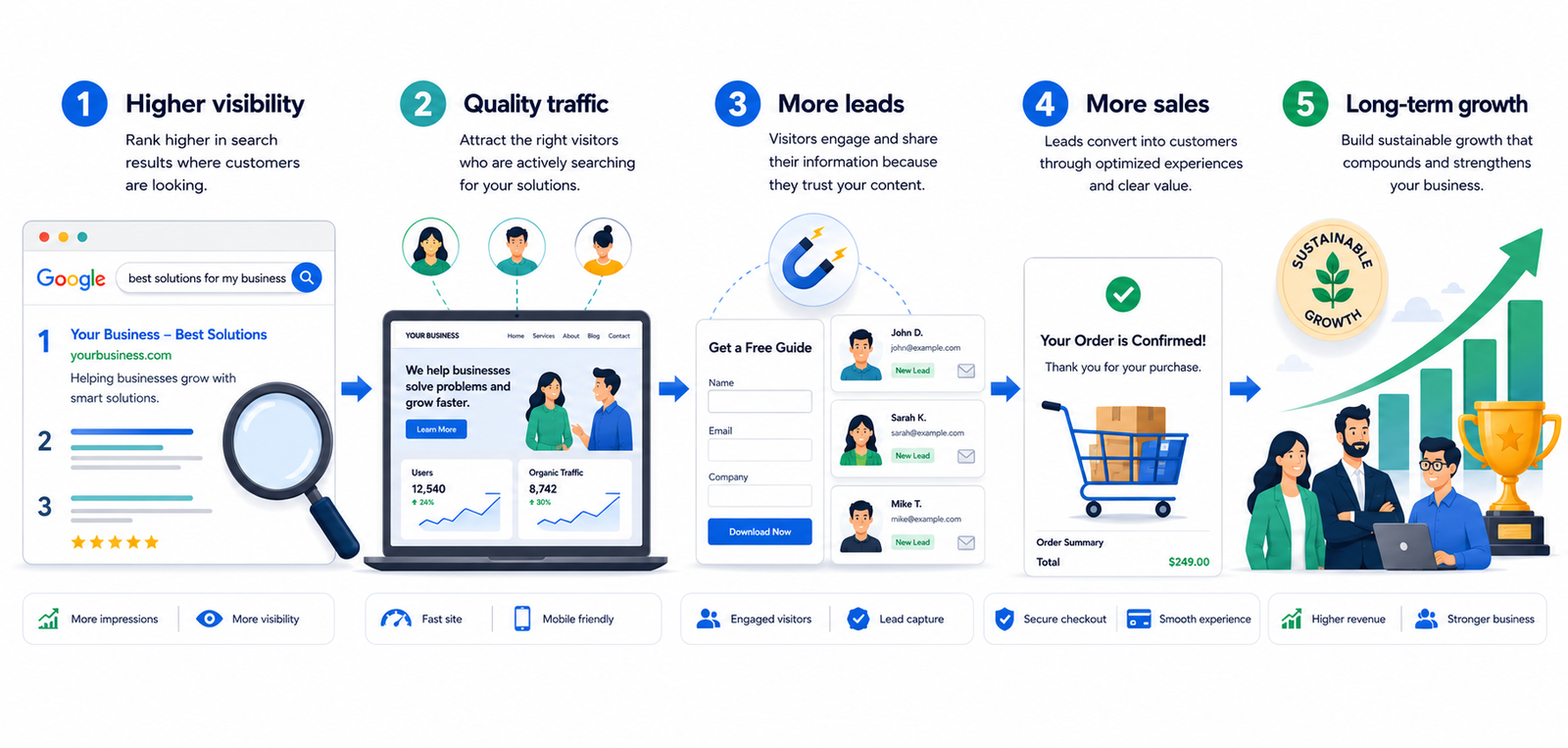
A high-converting website provides a smooth journey from initial interest to final purchase.
This journey typically includes:
attracting visitors through search engines or referrals
educating them with valuable information
building trust through testimonials and case studies
encouraging action through strong calls-to-action
Each step should guide visitors naturally toward becoming customers.
Investing in a high-converting website offers several long-term advantages:
higher sales without additional marketing costs
better customer experience
improved credibility and trust
stronger brand positioning
increased return on marketing investments
Businesses that prioritize conversion optimization often outperform competitors who rely solely on traffic generation.
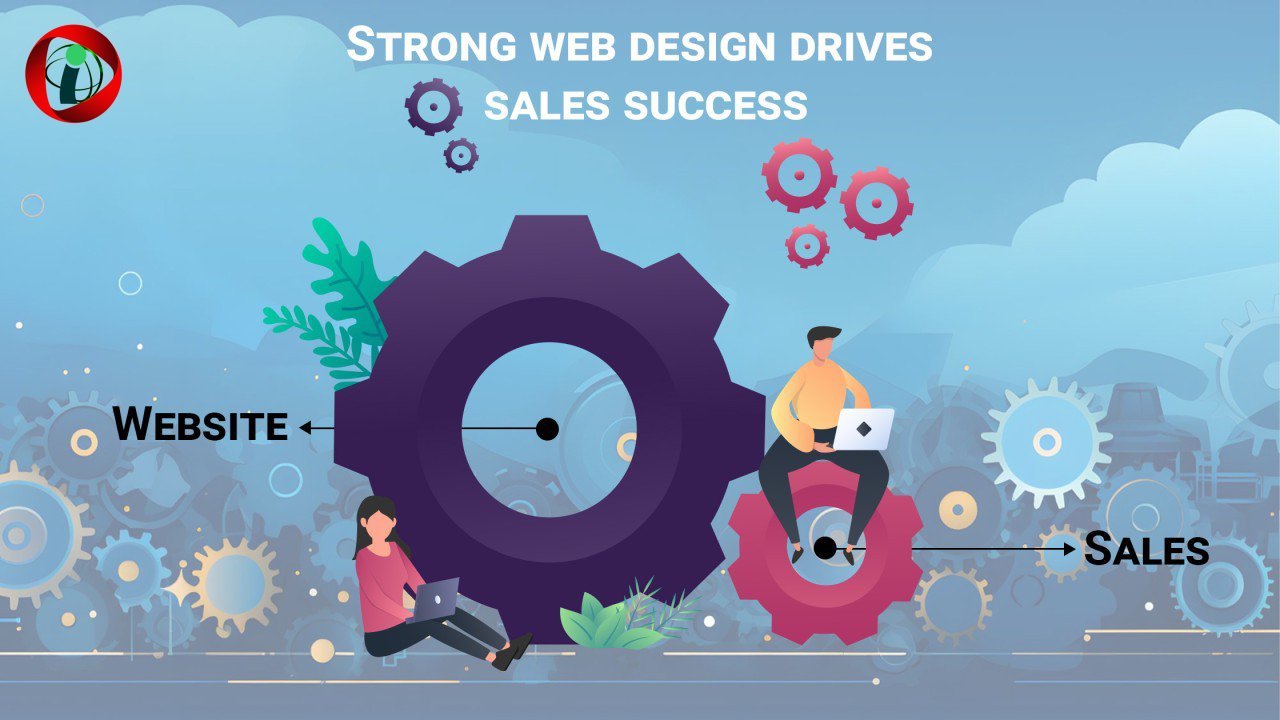
A website should do more than simply exist online—it should actively support business growth by converting visitors into customers.
High-converting websites achieve this by combining clear messaging, user-friendly design, trust-building elements, and strategic calls-to-action. These components work together to remove friction and guide visitors toward taking action.
Instead of constantly increasing marketing budgets, businesses can boost revenue by improving how their website performs.
By focusing on conversion optimization, companies transform their websites into powerful sales tools that generate results continuously.
In the modern digital economy, a high-converting website is not just an advantage—it is an essential asset for sustainable business growth.